
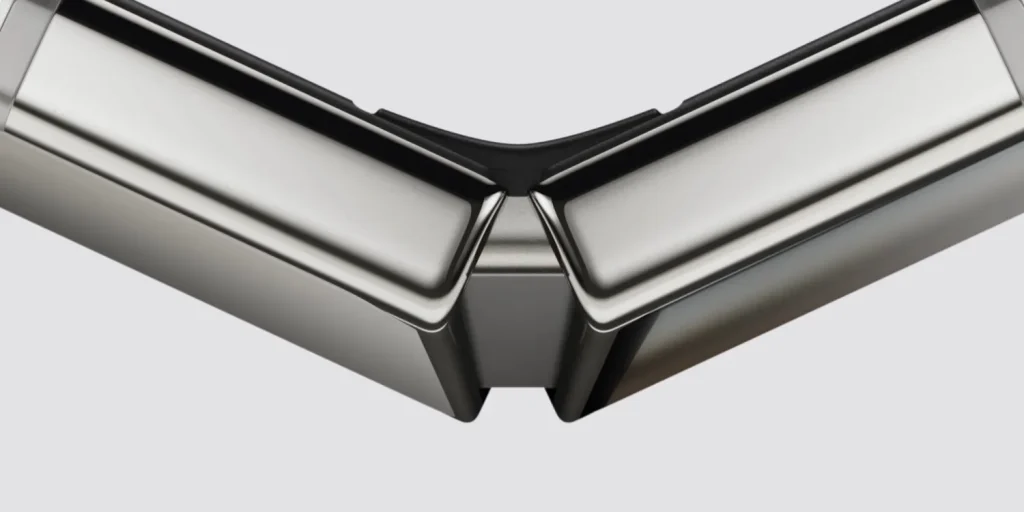
While a folding iPhone posed a new challenge for Apple’s thermal engineering team, they came up with a creative way to leverage the device’s hinge to their advantage. Here are the details.
The new SoC, which powers the iPhone 18 Pro, iPhone 18 Pro Max, and iPhone Duo, is Apple’s first iPhone chip built on a 2 nm process, following the technology’s debut with the M6 chip in the Mac mini in August. PCMag recently sat down with Dan Murray, Apple’s vice president of silicon engineering, and Banafsheh Barabadi, the company’s senior manager of thermal product design, to discuss the architecture of the A20 Pro chip. And while the A20 Pro was designed with all three new iPhones in mind, the iPhone Duo version packs some additional capabilities. These include a second display engine to run both screens simultaneously. The iPhone Duo’s A20 Pro variant is just slightly different. For the inner display, we also added support for placing the FaceTime camera behind the display. To surmount the issue, Apple routed a flexible graphite pipe through the hinge itself to transfer heat between the two halves, thereby increasing the surface area available for heat dissipation. “This part need[ed] to be co-engineered between our thermal team and the mechanical team. It’s a flexible material that needs to survive, as you can imagine, many hinge cycles while maintaining its thermal connectivity, and also its structural integrity throughout the product life cycle.”
“For iPhone Duo, we added a second display engine to support simultaneous operation of the inner and outer displays,” says Murray, “and with the increased CPU and GPU performance, we ensure we can deliver a smooth user experience across the displays. “This was one of the most technically challenging aspects of our design,” says Barabadi.
