
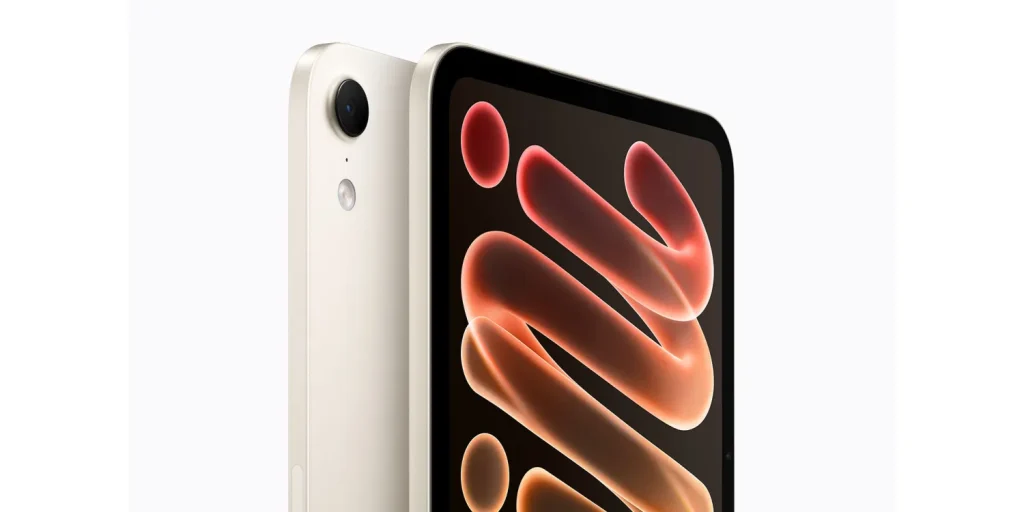
Apple yesterday officially launched what it describes as “ the biggest update ever ” to the iPad mini , featuring an OLED screen and a thinner, lighter design.
However, while there are a significant number of upgrades, internet commentators were very focused on the one thing Apple didn’t upgrade: that 60Hz display …
The larger 8.5-inch OLED display, also available with a nano-texture option, delivers higher contrast and more than 2x higher peak brightness than the previous-generation iPad mini for a brilliant and immersive viewing experience. A20 Pro supercharges AI with Neural Accelerators in each GPU core and Dual 16-core Neural Engine. iPad mini now has a 12MP Center Stage front camera on the landscape edge that’s perfect for video calls, an innovative Acoustic Display for an even better audio experience, faster wireless and cellular connectivity, and fast-charge support. “700 bucks and no 120hz display? Where Apple is still refusing to give the iPad Mini a 120Hz refresh rate with this latest model – utterly insane in the year two thousand and twenty-six, if I do say so myself – Astra 2 has a 185Hz refresh rate.
A stunning OLED display in an even thinner and lighter design, a huge leap in performance with A20 Pro, and water and dust resistance. The biggest point in Redmagic’s favor is in that display, too. I’ve not found that inherently better than a standard 120Hz panel, but it’s way better than the 60Hz panel Apple’s latest will still be using. Now I fully acknowledge that Apple knows the iPad mini market better than any of us do. None of these types of applications would remotely benefit from a display with a faster refresh rate. Additionally, when it comes to consumers, I’m sure it’s true that not everyone appreciates the benefits of 120Hz. Adding that category of individual purchasers to the majority business market, and Apple has undoubtedly correctly concluded that the majority of its customers simply don’t care about this feature.
Some of those in our comments claimed they couldn’t tell the difference, while others said it was only really relevant to gaming.
I’m also aware that it has historically been primarily a business device, used for applications ranging from restaurant waitstaff relaying orders to the kitchen through mobile payment terminals to warehouse inventory systems.
